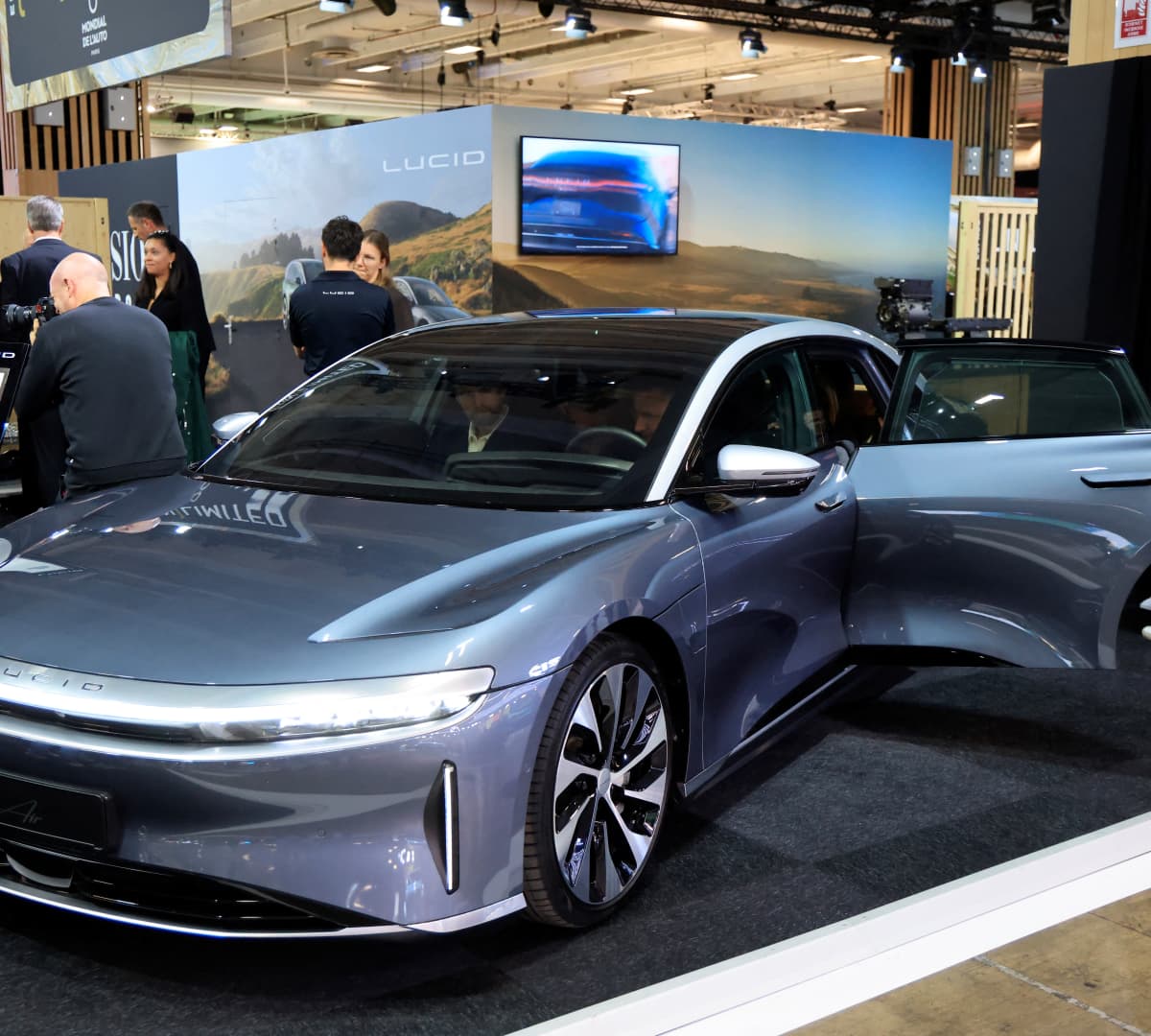
Lucid Group missed Wall Street's third-quarter expectations, and the company's own numbers explain why investors should be cautious even as the business argues it is moving in the right direction. The electric vehicle maker reported revenue of $336.6 million, a loss of $3.31 per share and an adjusted EBITDA loss of $717.7 million. Its net loss for the quarter was $830.9 million, down from $978.4 million a year earlier. Smaller losses are a real improvement, but they still describe a company spending far more than it earns.
The most notable bright spot is that adjusted EBITDA loss of $726 million beat Wall Street's expectation of a loss of $611 million. Lucid presents this as proof that its "operational reset" is working. Yet the same report shows the top and bottom lines both fell short, and the adjusted figure is a company-defined measure that leaves out interest, taxes, depreciation and amortization. A beat on an adjusted measure is worth noting, but it should not be mistaken for a healthy business.
The clearest signal in the report is the $1.75 billion increase in a delayed draw term loan from Saudi Arabia's Public Investment Fund, the company's largest shareholder. Lucid says the capital will fund operations and key investments into the fourth quarter of 2027, and it lifts total liquidity to $3.75 billion from $2 billion at the end of the third quarter. That money matters. It also means the company's runway depends heavily on one anchor shareholder, and the stock fell roughly 5% in aftermarket trading after the results were released.
CEO Silvio Napoli, who began leading the company in June, has announced a restructuring plan that includes $1.4 billion in cash flow improvements this year, a delay of the midsize vehicle to the second half of next year, and continued focus on a robotaxi program with Uber and Nuro. Those are sensible priorities on paper. But the company suspended its guidance and many targets in May, and it will not communicate a midterm plan until early next year. Investors are being asked to trust a turnaround whose full shape they have not yet seen.
Lucid should be judged on concrete milestones, not on the promise of progress. The next test is whether the company hits its $1.4 billion cash flow target and delivers its midsize vehicle on the revised schedule. Its early-next-year midterm plan should contain specific, measurable targets, not more open-ended language. Until then, the Saudi capital has bought Lucid time. Whether that time produces a sustainable company is still an open question.