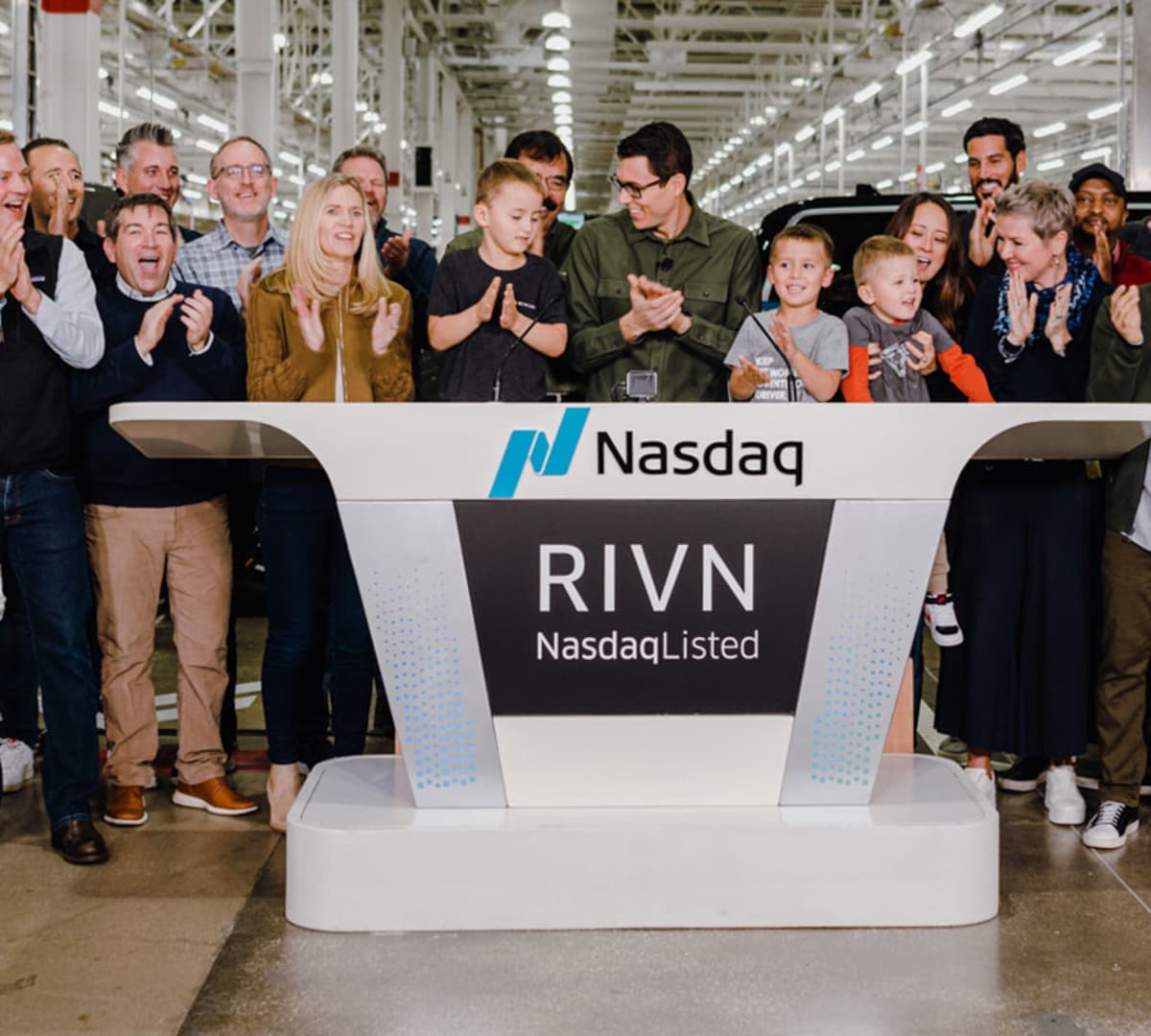
Rivian Automotive CEO RJ Scaringe says 2027 will be an "inflection year" for the company. He made the comment in an exclusive interview with CNBC, marking five years since Rivian's initial public offering on the Nasdaq.
Rivian's stock has fallen more than 80% since its debut at $78 per share on Nov. 10, 2021. The shares are down nearly 30% so far this year. Scaringe acknowledged that the company has not met all its goals, citing supply chain shortages, geopolitical tensions and slower-than-expected consumer EV adoption.
Scaringe said the midsize R2 SUV, with an entry-level price of about $45,000, is the core of the business. Rivian said it delivered a record 19,248 vehicles in the third quarter of 2026, up 46% year over year. The company said the R2 is already its best-selling vehicle by volume.
Rivian said automotive cost of goods sold per vehicle improved by more than $12,000 quarter over quarter. It attributed the gain to a higher R2 mix and better fixed-cost leverage. In the third quarter, the company reported $176 million in consolidated gross profit. Its automotive business posted an $80 million gross loss, while its software and services unit generated $256 million of gross profit.
Rivian is building a multibillion-dollar factory in Georgia. Scaringe has said the plant is needed to reach the volumes required for net profitability. Rivian said the Georgia plant will be able to produce up to 300,000 units annually once initial construction is completed in late 2028.
Rivian said its cash, cash equivalents and short-term investments totaled $5.5 billion at the end of the third quarter. The company said its total available future liquidity is expected to be about $13 billion, including credit, partnership funds from Volkswagen and Uber, and a $4.5 billion U.S. Department of Energy loan for the Georgia plant. Scaringe said Rivian will be "opportunistic" about any additional capital raises.
Several Wall Street analysts expect Rivian's investment requirements to rise significantly in 2027. Deutsche Bank analyst Edison Yu said in an Oct. 30 note that a multiyear path to cash flow breakeven would be less attractive to investors.
Scaringe said Rivian plans to release "point-to-point" driving capabilities, which would let vehicles drive themselves between destinations with a driver monitoring. Rivian plans to roll out the feature first to employees, then to customers, over the coming weeks and months. Scaringe said autonomous vehicles with Uber are expected by 2028. Tesla is currently the only automaker offering similar features, according to the report.